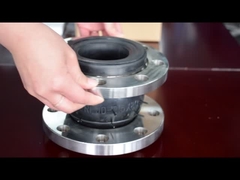
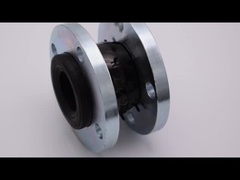
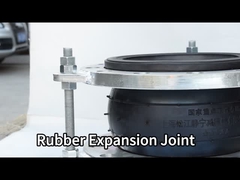
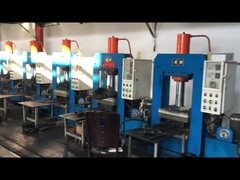
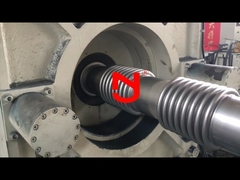
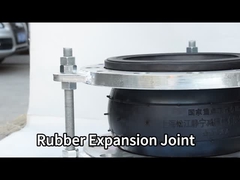
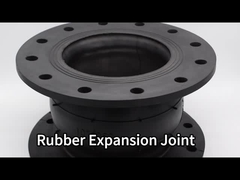
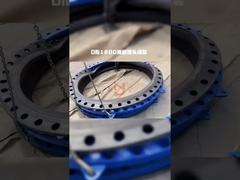
Brief: In this video, we provide a dynamic demonstration of the Single Sphere Flexible Rubber Bellows, showing how it effectively handles high-temperature piping systems. You'll see a detailed walkthrough of its construction, material layers, and performance under various conditions, including axial and radial displacement tests. Learn how this high-elasticity, airtight joint accommodates thermal expansion and resists harsh media in industrial applications.
Related Product Features:
Constructed with high-elasticity rubber for excellent flexibility and airtightness in piping systems.
Features multiple rubber layer options including IIR, CR, EPDM, NR, and NBR for varied media resistance.
Reinforced with polyester cord fabric and bead rings to withstand working pressures up to 1.6 MPa.
Designed to operate in a wide temperature range from -20°C to +115°C, with special conditions up to 250°C.
Suitable for conveying diverse media such as air, water, seawater, hot water, oil, and acid-base solutions.
Accommodates axial displacement (extension and compression) and radial displacement to absorb pipe movements.
Available in flange materials including Q235, 304, and 316L for corrosion resistance and durability.
Provides reliable performance under vacuum conditions, with ratings of 53.3 kPa for smaller sizes and 44.9 kPa for larger ones.
Faqs:
What temperature range can the Single Sphere Flexible Rubber Bellows withstand?
The bellows are designed to operate in temperatures from -20°C to +115°C under standard conditions. For special applications, they can handle temperatures as low as -30°C and as high as 250°C, making them suitable for high-temperature piping systems.
Which media are compatible with this flexible rubber expansion joint?
This joint is compatible with a wide range of media, including air, compressed air, water, seawater, hot water, oil, and various acid-base solutions. The inner and outer rubber layers are available in materials like IIR, CR, EPDM, NR, and NBR to match specific media resistance needs.
What are the key displacement capabilities of this rubber bellows?
The bellows can accommodate axial displacement (both extension and compression), radial displacement, and angular deflection. Specific values vary by size; for example, a DN50×32 model allows 15 mm extension, 18 mm compression, 45 mm radial displacement, and a 35° deflecting angle.